8 May 2026
Understanding the carbon burden
The journey to net zero is often framed as a race: a sprint to deploy renewables, decarbonise transport, and roll out low‑carbon infrastructure at unprecedented speed. What we don’t discuss enough is the carbon cost of the transition itself. The emissions generated in building and deploying these solutions are often unavoidable in the short term, creating a paradox at the heart of decarbonisation.
Across the world, this paradox is becoming clearer. Some of the investments which will ultimately support the decarbonisation of the economy - such as the ports necessary for the deployment of offshore wind, supply chain, manufacturing, and industrial upgrading - carry a substantial carbon footprint today. At the Scottish National Investment Bank, we refer to this as the carbon burden.
Understanding this burden is not simply an accounting exercise, it reshapes how investors and policymakers should articulate their rationale around the broader impact beyond purely emissions mitigation.
The necessary paradox of the transition
Scotland’s ambition to reach net zero by 2045 requires the economy to be reshaped, emissions mitigation across key sectors and climate resilience.
However, the path to this new Scotland is not a straightforward route. This complexity is reflected within own portfolio, where our analysis has identified that our portfolio emissions are rising as we deploy more capital and companies scale.
Some actions are emissions intensive today, but will have a payback period, as they either directly reduce emissions or will capture emissions from the atmosphere. Other emissions intensive actions may never result in direct emissions savings, however represent an essential building block to deliver longer term carbon reduction.
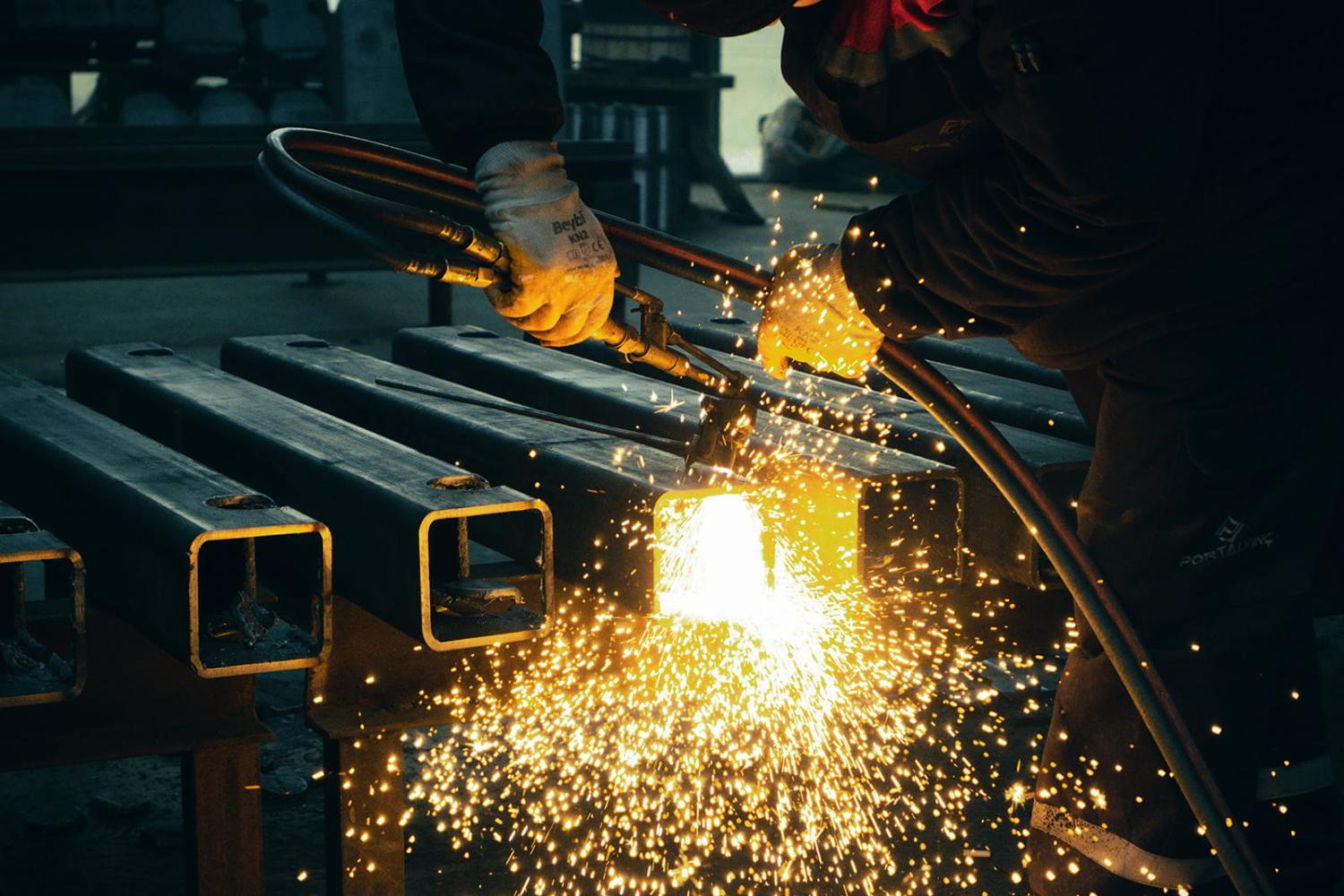
For example, the growth of the offshore wind sector is vital to Scotland’s ambitions, but expanding these farms requires appropriate supply chains and supporting infrastructure, which will emit more greenhouse gases today (e.g. steel fabrication to heavy transport) even though they are essential to harnessing and unlocking a future of low carbon electricity generation.
This paradox sits at the core of the carbon burden.
This concept can be further explored through the EU Green Taxonomy, which provides a framework to recognise three tiers of sustainable activity:
- Primary activities (activities which directly reduce emissions)
- Enabling activities (activities which facilitate reductions)
- Transitional activities (best practices applied to emission intensive activities, where low carbon alternatives are not yet viable)
Investment in Scotland’s net zero future needs sit across all three, as together they form those building block for a whole economy, just transition.
Carbon burden or carbon liability?
The carbon burden poses a significant challenge to emissions reporting frameworks, which struggle to adequately capture such a paradox. Many investors will focus on assets which directly reduce or remove emissions within the investment period, contributing to the investor’s own sustainability goals.
This is understandable but short-term in nature.
A proper transition requires support for entire systems to undergo fundamental structural change as they pursue a low‑carbon future. Investors must look beyond short term carbon metrics to understand the true impacts of their investments – whether those investments enable decarbonisation over time or secures communities to the impacts associated with climatic change.
As an impact focused development bank, this means two things for us:
- Transparency is key - rising portfolio emissions do not necessarily equate to a misalignment with net zero goals. Conversely, investment in critical enabling activities may signal growing climate ambition at a system level. Essential infrastructure and supply chains - such as ports, subsea cables and large‑scale fabrication - are unlikely to be net zero under strict carbon accounting. Yet without them, Scotland’s renewable sector will not deliver on its ambitions. Transparency, supported by a clear narrative that explains the broader system impact of such investments, is therefore essential.
- Patience is essential - renewable generation assets have a multi-year carbon payback period, as their operational savings with outweigh any emissions associated with construction or embodied emissions from materials.
A just transition requires embracing, not avoiding, the burden
As we transition, we must consider the impacts on communities, supply chains and regional economies.
A true just transition cannot shy away from transitional sectors. Wind turbines and solar panels alone will not be enough for Scotland to be a low carbon economy. The reality is that some of the transition will be built from raw materials like steel and concrete.
Engaging these sectors, supporting best practice and highlighting innovation is crucial to sustaining Scotland’s progress towards emissions reduction targets. Reflecting on Scotland’s progress to date, we have made leaps in some sectors, while others remain more difficult to decarbonise. This is where the investor focus is key to unlocking tangible progress in these sectors.
We work with our portfolio companies to develop carbon management plans, providing tools to assess carbon footprints and where applicable we encourage alignment with standards such as PAS2080 and BREEAM, and encourage our portfolio to articulate credible carbon accounting for a long term emissions reduction strategy. Today, more than 95% of our portfolio is engaged in this process.
Changing the narrative around what “impact” looks like
To support global climate ambitions, the broader investment lens needs to expand. Investors, cannot define success as being low operational emissions in early years. They must instead ask how their investments support wider systemic change. This requires a narrative shift:
- From minimise emissions now to maximise emissions reductions in the future.
- From portfolio optimisation to system optimisation.
- From low-carbon investments to carbon strategic investments.
Impact, in the context of net zero, is not the absence of emissions, but the catalyst that supports true transition. In other words: decarbonisation is a system not a set of isolated assets. This is true across all infrastructure that is required for a sustainable and climate resilient economy and nation.
This is what’s at the core of the carbon burden. Delivering net zero is not only about reducing emissions. It is about sequencing emissions, accepting increases today in order to eliminate far more tomorrow. Investors who fail to recognise this, risk misallocating capital, stalling innovation, or driving critical transition sectors to the margins.
This burden is one that must be carried collectively and carried wisely.
Learn more

Craig Love
Director, Impact Assessment and Environment at the Scottish National Investment Bank

Aoife Hutton
Associate, Impact Assessment and Environment, Scottish National Investment Bank